What do garage door cables do?
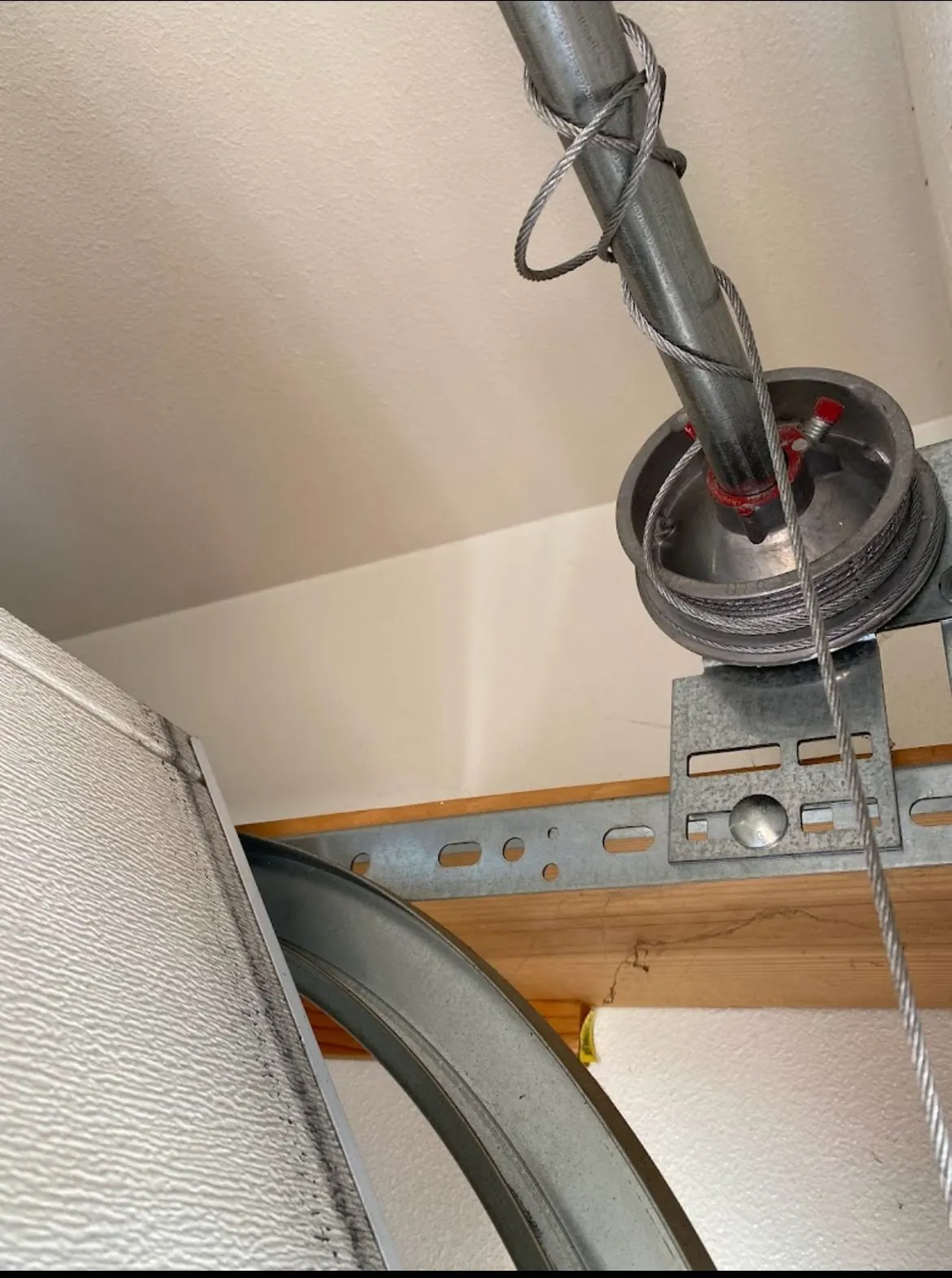
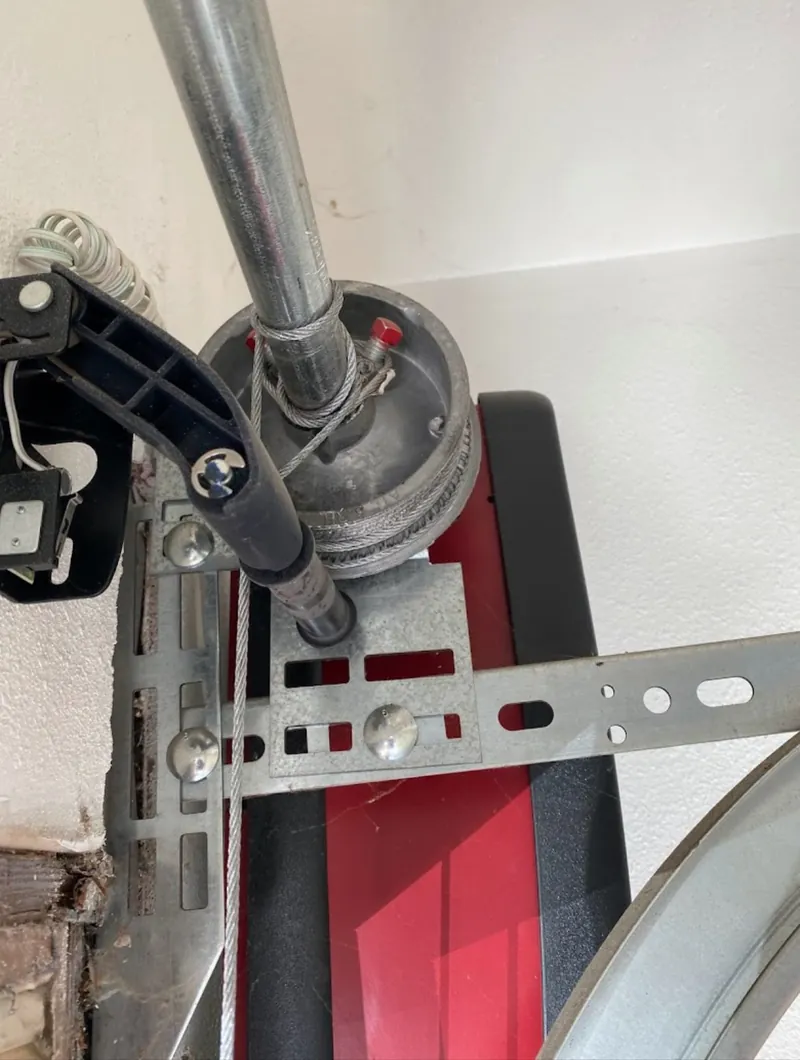
Lift cables connect the springs to the bottom of the door. On a torsion system, the springs turn a shaft above the door, the shaft turns a drum at each end, and the cables wind onto those drums as the door rises. On an extension spring system, the cables run over pulleys along the tracks and connect to the stretched springs.
Either way, the cables carry the full lifting force of the springs. They are steel, but they work hard every time the door moves, and they fail at the points where they bend around a drum or pulley or attach at the bottom bracket. When one cable fails, the door loses lift on that side and tips.
Why garage door cables fray, slip and snap
The most common cause is plain wear. Over years of cycles, individual strands break near the bottom bracket or where the cable wraps the drum. Rust speeds that up. In humid Central Texas garages, and especially where storm rain blows under a worn bottom seal, the lower end of the cable sits in damp air and corrodes first.
Cables also slip off the drum when they go slack. That happens when the door hits something on the way down, like a trash bin or the hood of a car, or when the door binds in the track and the opener keeps pulling. A broken spring can also unload a cable suddenly, which is why we always look at both.
- Worn or rusted strands near the bottom bracket.
- Slack cable after the door hits an object on the way down.
- A broken spring that suddenly unloads one side.
- Worn or cracked drums that cut into the cable.
- Track or roller problems that let the door bind and twist.
Need help with your cable repair? Free estimate, price before work.
Is a broken garage door cable dangerous?
Yes. When a cable fails, the door is held up on one side only, and it can shift, twist out of the tracks or come down hard. The remaining cable and spring are still under full tension. The bottom bracket on the good side is holding a lot of force, and loosening it is one of the most common ways people get hurt working on garage doors.
If a cable has snapped or slipped, stop using the opener, keep cars and people away from the door, and do not try to lift it level by hand. If the door is stuck partly open, we can secure it the same day in most cases. See emergency garage door repair for what to do while you wait.
Cable replacement versus a quick rewind
Sometimes a cable has only slipped off the drum and is still in good condition. In that case we can rewind it, rebalance the door and find out why it slipped, so it does not happen again. That is usually a quicker job.
If the cable is frayed, kinked, rusted or has been crushed or bent, it should be replaced. We replace cables in pairs, because the other side has done the same work and a new cable stretches differently from an old one. Matching cables keep the door lifting evenly, so the bottom closes level and the door does not drift toward one side over time.
Cables, springs and drums: why we check the whole system
Cables almost never fail alone. A slipped cable often means a spring has lost tension or the door is binding. A snapped cable often goes with a spring that is near the end of its life, or a drum that is cracked or grooved. Fixing only the cable can leave you with another failure a few weeks later.
During a cable repair we check the springs, drums, center bearing, end bearings, rollers and tracks, and tell you what we see. If a spring is worn out, you get the price for spring repair as a separate line, and you decide whether to do it now or later.
Need help with your cable repair? Free estimate, price before work.
Keeping new cables in good shape
A few simple habits help new cables last. Keep the bottom seal in good shape so rain does not pool against the bottom brackets. Keep bins, bikes and cars out of the door path so the door never lands on something and lets the cables go slack. Watch for a door that starts closing unevenly, because that is the earliest sign of trouble.
Once or twice a year, look at the lower end of each cable for broken strands or rust, without touching it. A yearly maintenance visit covers the cables, drums and brackets along with lubrication and a balance check, and it catches a worn cable before it snaps.
What affects garage door cable replacement cost
Garage door cable replacement cost depends on the door type and what else was damaged. A slipped cable that only needs rewinding is simpler than two new cables with new drums and bottom brackets. A door that twisted out of the tracks when the cable failed adds track and roller work.
The estimate is free, and you hear the price before any work starts. If the springs or other parts need attention, we list them separately, so you can decide what to fix today. Call (512) 843-2980 and describe what the door is doing, and we will tell you what to expect.
How the visit goes
Most calls follow this order. Times are typical ranges, and we confirm the arrival window when you call.
| Step | Typical time | What happens |
|---|---|---|
| You call | A few minutes | Tell us what the door looks like and whether it is open or closed. We give you safety steps and an arrival window. |
| Secure and inspect | About 10 to 15 minutes | The door is clamped and supported, then cables, drums, brackets, springs and tracks are inspected. |
| Free estimate | A few minutes | You get the price for the cables and anything else we found, before any work starts. |
| Cable replacement | About 45 to 90 minutes | Tension released, new cables installed and wound evenly, door leveled and springs reset. |
| Test and walk-through | About 10 minutes | Door balanced and cycled, opener and safety reverse tested, and old parts shown to you. |