Belt, chain or wall-mount: which garage door opener is best?
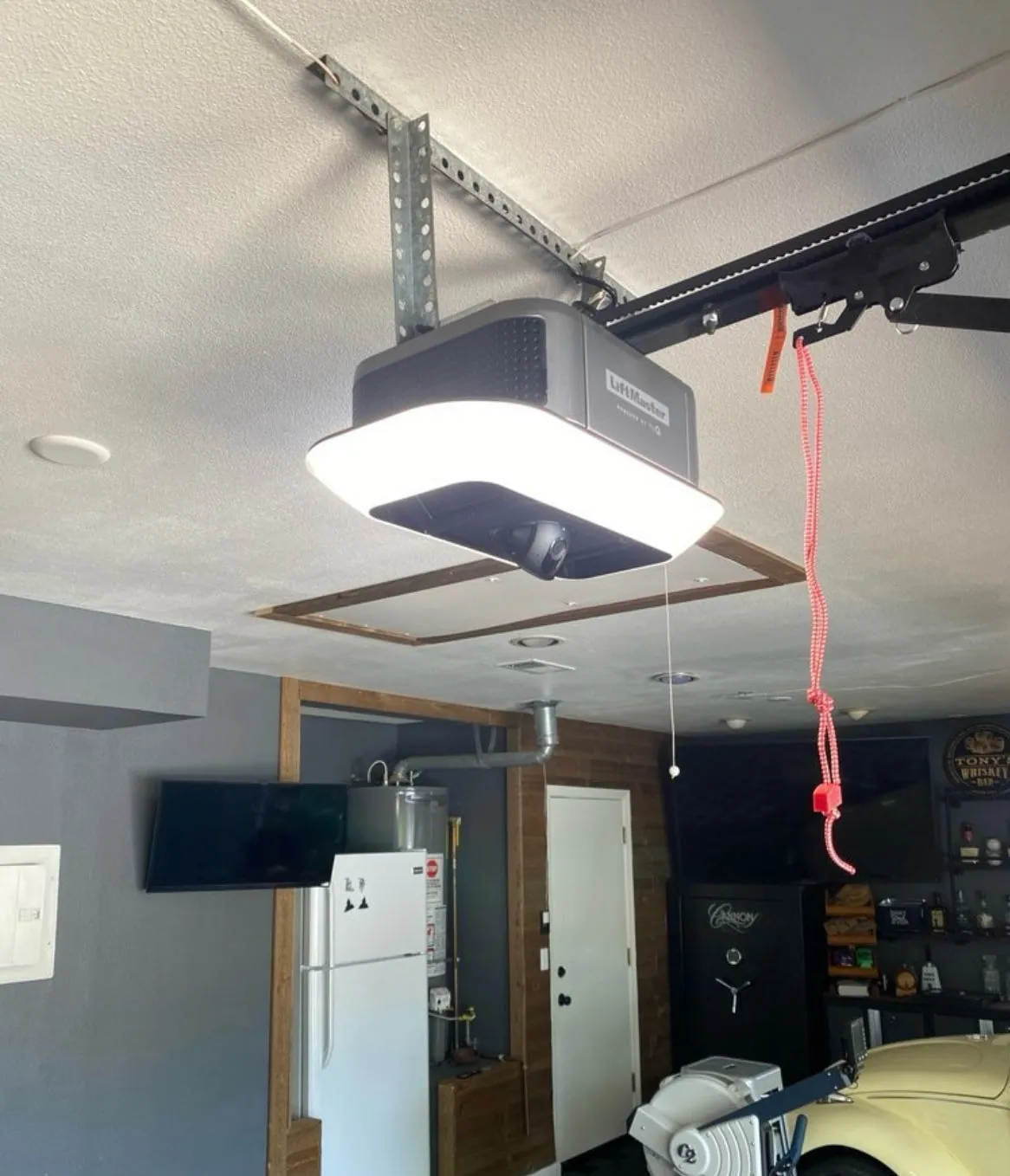
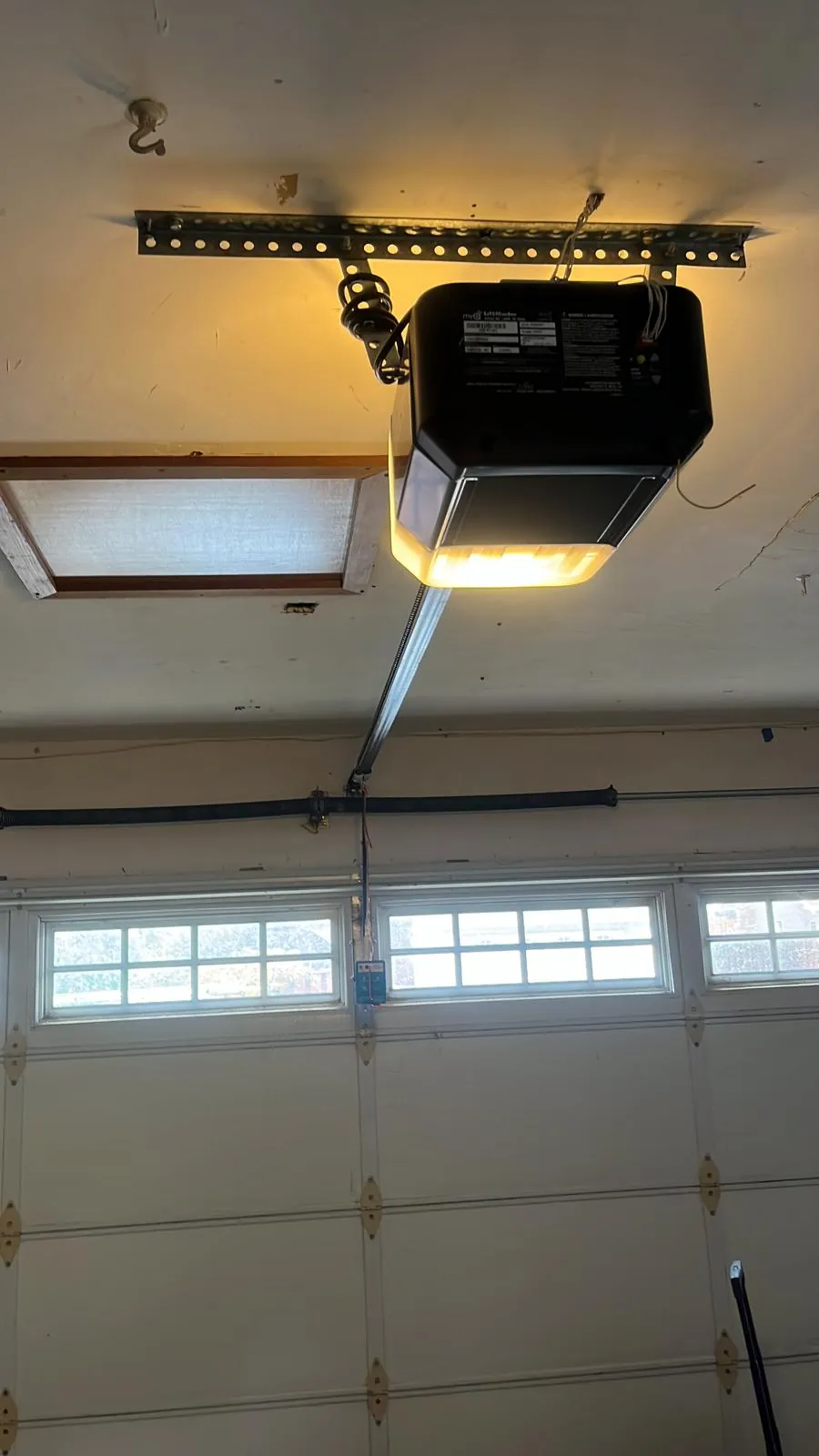
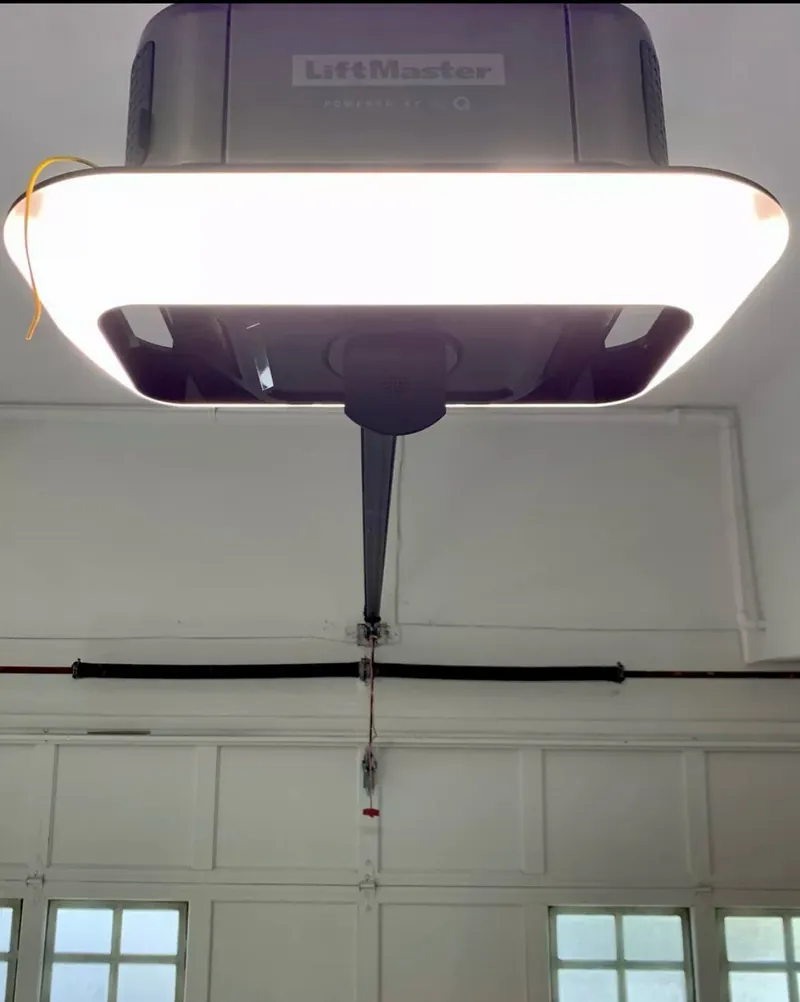
There is no single best garage door opener, only the best one for your garage. A chain drive opener is strong, simple and durable, and it suits detached garages or homes where noise does not matter much. A belt drive garage door opener works the same way with a reinforced rubber belt, so it runs much quieter. It is the common choice when a bedroom or living room sits above or next to the garage.
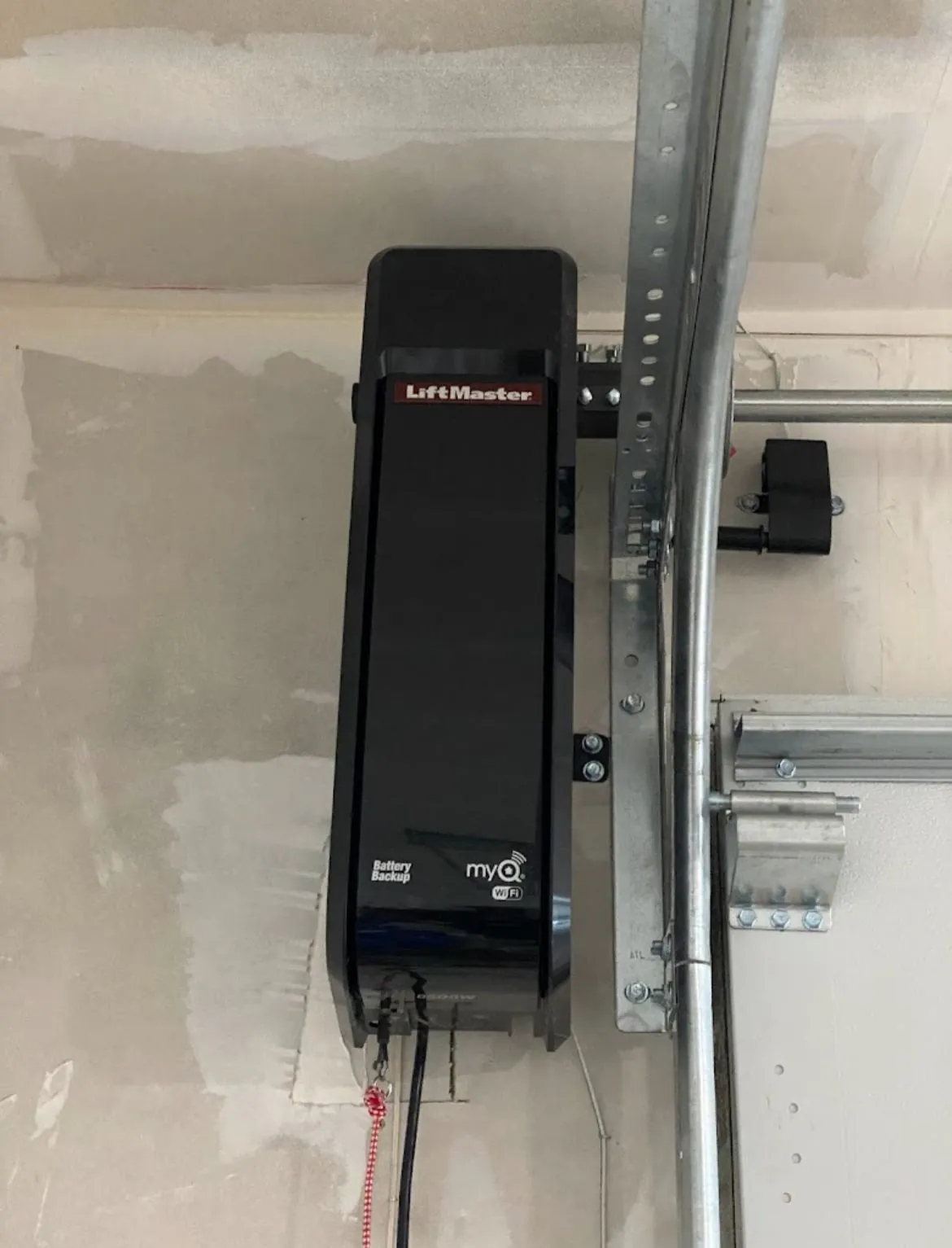
A wall mount garage door opener, also called a jackshaft opener, mounts on the wall beside the door and turns the torsion bar directly. It frees the ceiling for storage racks, a car lift or a high ceiling, and it is very quiet. It needs a torsion spring system and some room beside the door, which we check during the estimate.
Chain drive
Strong and economical. Louder, so best for detached garages or rooms away from living space.
Belt drive
Same layout as a chain drive with a quiet belt. A good fit for most Austin homes with rooms over the garage.
Wall-mount (jackshaft)
Mounts beside the door and clears the ceiling. Quietest option. Needs torsion springs and side clearance.
Smart and myQ garage door openers
A smart garage door opener connects to your home Wi-Fi so you can open, close and check the door from your phone. You get an alert when the door opens, you can let in a delivery or a family member while you are away, and you can close a door you left open from the office. On many LiftMaster and Chamberlain models this runs through the myQ app.
Smart features need a decent Wi-Fi signal in the garage, which is often the weak spot in a house. We check the signal during the estimate and tell you if you need a range extender. If you only want phone control and your current opener is in good shape, an add-on smart controller can sometimes do the job without replacing the whole opener.
Need help with your opener installation? Free estimate, price before work.
Battery backup openers and Central Texas power outages
Power outages are not rare in Central Texas. The February 2021 winter storm brought long, widespread outages across Texas, and the May 2025 hail and wind storm left more than 68,000 customers in the Austin area in the dark. When the power is out, a standard opener does nothing, and the only way out is the manual release.
A garage door opener battery backup keeps the opener running for a number of cycles during an outage, so you can still get the car out. Many newer openers offer it built in or as an add-on. If you have ever been stuck pulling the red cord in the dark, or someone in the home cannot lift a heavy door by hand, a battery backup is worth asking about.
Choosing the right power for your door
Opener power is about matching the motor to the door. A single steel door with a balanced spring needs far less than a double insulated door or a heavy wood carriage-style door. An underpowered opener strains and wears out early. An overpowered one can mask a door problem it should be telling you about.
Many current openers use DC motors, which start and stop softly, run quieter and work well with battery backup. We match the opener to your actual door: its width, material, insulation and spring setup. If the door is heavier than it should be because of a worn spring, we fix the spring first so the new opener has an easy life.
Garage door opener replacement: when is it time?
Garage door opener replacement makes sense when the opener is old, loud, unreliable or missing modern safety and security features. Older openers often use fixed or outdated radio codes, and remotes for them can be hard to find. If the opener needs a logic board and a motor, or keeps breaking every few months, a new unit is usually the better use of money.
If the opener is reasonably new and only one part failed, opener repair is often the smarter choice, and we will tell you so. We give you the repair price and the replacement price side by side whenever both are realistic, and you decide.
Need help with your opener installation? Free estimate, price before work.
What affects garage door opener installation cost
Garage door opener installation cost depends on the type of opener, the features you choose and the garage itself. A basic chain drive on a standard 7-foot door is a different job from a wall-mount smart opener with battery backup, a camera and a keypad. High ceilings, missing outlets near the opener, and doors that need a reinforcement bracket also affect the price.
We also install customer-supplied openers if you already bought one, after checking that it suits your door. The estimate is free and you get the price before any work starts, including removal of the old opener. Call (512) 843-2980 and tell us about your door and what you want the opener to do.
Outlets, alarm systems and what we do not do
An opener plugs into a standard ceiling outlet near the motor. If there is no outlet in the right place, a new circuit or outlet is electrical work, and in Texas that belongs to an electrician who holds a state electrical license. We tell you up front if your garage needs one, so the job is not delayed on install day.
If you want the opener tied into a monitored home alarm or an access logging system, Texas Department of Public Safety rules treat that as regulated security work. A standalone opener with its own app is not affected. For alarm integration, we coordinate with your alarm company rather than wiring it into their system ourselves.
How the visit goes
Most calls follow this order. Times are typical ranges, and we confirm the arrival window when you call.
| Step | Typical time | What happens |
|---|---|---|
| Estimate and choice | About 15 to 20 minutes | We check the door balance, ceiling, outlet and Wi-Fi, help you choose an opener and give you the price before any work starts. |
| Old opener removal | About 20 to 30 minutes | The old opener, rail, sensors and wall control come down and are hauled away. |
| Installation | About 1.5 to 3 hours | Opener mounted, rail or wall unit aligned, sensors and wall control installed and wired. Wall-mount units can take longer. |
| Programming | About 15 minutes | Remotes, keypad and car buttons paired; Wi-Fi and phone app set up on smart models. |
| Safety test and walk-through | About 10 to 15 minutes | Limits, force, sensors and auto-reverse tested, and we show you the release and key features. |