

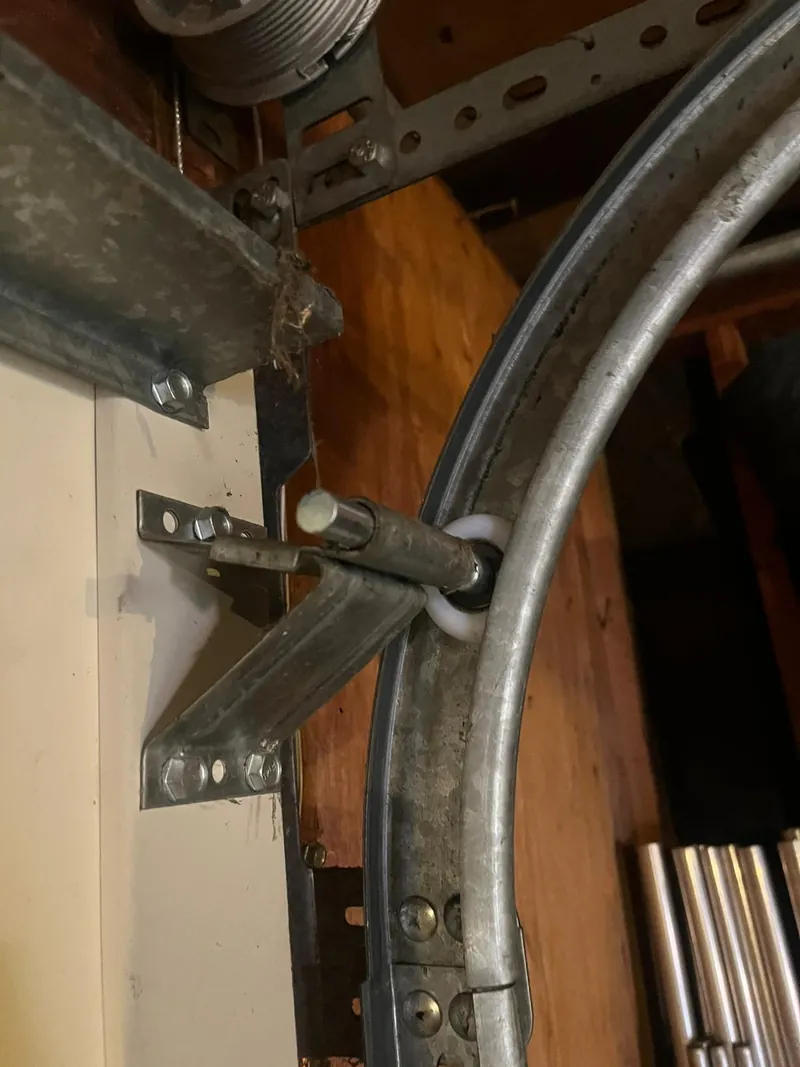
What garage door rollers do, and why they wear out
Rollers are the small wheels on each side of every door section that ride in the tracks. A typical door has a roller at each hinge line, so a two-car door may have ten or more. They carry the door along the track every time it opens and closes, and they take the bumps when the door starts and stops.
Rollers wear like any moving part. The bearings dry out, the wheels flatten or crack and the stems bend. Cheap plastic rollers without bearings, common on builder-grade doors, wear fastest. Worn rollers make noise, make the opener work harder and can eventually jump out of the track and leave the door stuck.
Nylon vs steel garage door rollers
Nylon rollers with sealed ball bearings are what we install most often. They are quiet, they roll smoothly and the sealed bearings keep dust out, so they need little care. For an attached garage with a bedroom, office or living room nearby, they make a noticeable difference in noise.
Steel rollers are strong and suit very heavy doors, but they are louder because steel rides on steel, and their bearings need regular oil or they rust and seize. Plain plastic rollers are the cheapest and wear out the fastest. During the estimate we show you the options and the price for each.
Sealed-bearing nylon
Quietest, smooth, low upkeep. The best fit for most homes in the Austin area.
Steel
Strong for heavy doors. Louder, and the bearings need regular oil.
Plain plastic
Builder grade and inexpensive. Wears fastest, and usually the reason we are called.
Need help with your roller replacement? Free estimate, price before work.
Can I replace garage door rollers myself?
Garage door rollers are sold in hardware stores, and the middle rollers on most doors can be swapped by a careful homeowner with the door closed and the opener unplugged, by loosening one hinge at a time. Many people do it with good results.
The bottom rollers are different. They sit in the bottom brackets, and those brackets are tied to the lift cables and hold the full tension of the springs. Loosening them without releasing the springs can cause serious injury. If your bottom rollers are worn, or you are not sure which brackets are which, let us handle the job.
Roller replacement as a noise fix
If your garage door is loud, worn rollers are one of the first things to check. Bearings that have run dry grind, flattened wheels thump, and loose rollers rattle in the track. Replacing them with sealed-bearing nylon rollers is often the single biggest change you can make to a noisy door.
Noise also comes from worn hinges, dry springs, loose hardware and the opener itself. A chain drive opener, for example, is louder than a belt drive. We check all of it and tell you which fixes will make the biggest difference, so you are not paying for parts that will not help. A maintenance tune-up covers the rest.
Hinges and roller brackets
Each roller sits in a hinge or bracket bolted to the door sections. When a hinge cracks or its hole wears into an oval, the roller sits crooked in the track and wears unevenly, the door binds and the sections can start to separate. Garage door hinge replacement often goes with roller replacement for that reason.
We check every hinge for cracks, loose bolts and worn holes while the rollers are out. Damaged hinges are replaced and the rest are tightened. The result is a door where every section moves together, which is easier on the rollers, the opener and the springs.
Need help with your roller replacement? Free estimate, price before work.
Heat, dust and rollers in Central Texas garages
Austin garages get hot for months at a time, and the National Weather Service puts normal highs above 90 degrees from late May to late September. Heat dries out lubricants faster, and the fine dust that blows into garages in dry spells gets into open bearings and grinds them down.
Sealed-bearing rollers handle those conditions better than open-bearing or plain plastic rollers. Keep the tracks clean and dry, lubricate the hinges and roller stems a couple of times a year, and watch for black dust in the tracks, which usually means a roller is wearing out. Worn rollers left too long can knock the door off track.
What affects garage door roller replacement cost
Garage door roller replacement cost depends on how many rollers your door has, the type of roller you choose, whether the bottom brackets or hinges also need replacing, and whether the springs have to be released to reach the bottom rollers.
The estimate is free, and you get the price before any work starts. Roller replacement is often done together with a tune-up or another repair, which saves a second visit. Call (512) 843-2980 and tell us what the door sounds like, and we will tell you what we expect to find.
How the visit goes
Most calls follow this order. Times are typical ranges, and we confirm the arrival window when you call.
| Step | Typical time | What happens |
|---|---|---|
| You call | A few minutes | Describe the noise or the problem. We book a time that suits you, often the same day. |
| Inspection | About 10 to 15 minutes | Rollers, hinges, tracks, springs and opener checked, and worn parts shown to you. |
| Free estimate | A few minutes | You get the price for the rollers you choose and anything else we found, before any work starts. |
| Roller replacement | About 45 to 90 minutes | Rollers and worn hinges replaced, bottom brackets done with spring tension released, tracks cleaned. |
| Lubricate and test | About 10 to 15 minutes | Moving parts lubricated, door balanced and cycled, opener and safety reverse tested. |